Histological Methods to Detect Early-stage Plant Defense Res
发布日期:2025-11-04 17:53
来源:bio-protocol
作者: Vasiliki Skiada ema
浏览次数:
羊茅人工接种多年生黑麦草过程中植物早期防御反应的组织学检测
Skiada, V. and Papadopoulou, K. K. (2025). Closed Systems to Study Plant–Filamentous Fungi Associations: Emphasis on Microscopic Analyses. Bio-protocol 15(4): e5186. DOI: 10.21769/BioProtoc.5186.
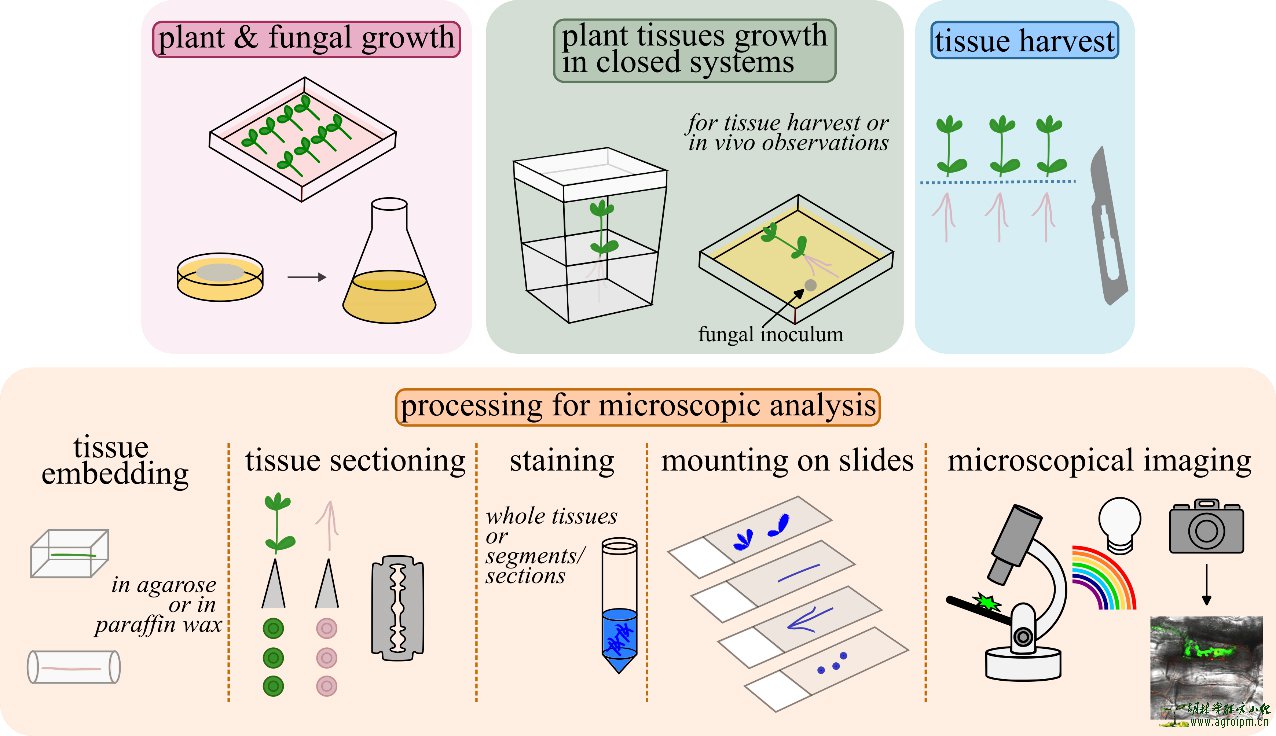
In nature, filamentous fungi interact with plants. These fungi are characterized by rapid growth in numerous substrates and under minimal nutrient requirements. Investigating the interaction of these fungi with their plant hosts under controlled conditions is of importance for many researchers aiming to proceed with molecular or microscopical investigations of their favorite plant–fungus interaction system. The speed of growth of these fungi complicates transferring plant–fungal interaction systems in laboratory conditions. The issue is more complicated when monoxenic conditions are desired, to ensure that only two members (a fungus and a plant) are present in the system under study. Here, two simple closed systems for investigating plant–filamentous fungi associations under laboratory, monoxenic conditions are described, along with their limitations. The plant and fungal growth conditions, methods for sampling, staining, sectioning, and subsequent microscopical imaging of colonized plant tissues with affordable, common laboratory tools are described.
Epichloë 属真菌与多种冷季型禾草形成具有重要农业价值的共生体系。为研究此类共生,例如 Epichloë festucae 与多年生黑麦草(Lolium perenne)的互作,可通过人工接种黄化幼苗实现。接种时,将菌丝体置于分生组织切口内,方法源自 Latch 和 Christensen(1985)。近年来,该方案被广泛用于不同 E. festucae 突变体(可引发不相容互作)的分子机理研究。我们已建立并优化了四项关键寄主早期反应检测方法:细胞死亡、胼胝质沉积、木质素生成及过氧化氢(H₂O₂)产生,可用于精确定义侵染初期的寄主响应。