
发布日期:2026-01-16 22:57 浏览次数:
Type II polyketide synthases: Impact on human health, current knowledge, and future directions
https://doi.org/10.1016/j.jbc.2025.110749

Natural products have a long history of use in traditional and modern medicine due to their inherent bioactivity. Some medicinal activities include antibiotic, antifungal, anticancer, antiviral, antihypercholesterolemic, and immunosuppressant. One of the largest classes of bioactive natural products are polyketides, produced by polyketide synthases (PKSs). PKSs are closely related to fatty acid synthases, sharing a core biosynthetic logic that iteratively builds larger molecules from simple precursors. However, PKS produce compounds with incredible structural diversity and function through the accretion of small chemical alterations not available to fatty acid synthase at each point during synthesis. Polyketide biosynthesis can be grouped into initiation, extension, reduction, aromatization and cyclization, and tailoring steps. Changes at each step have the potential to produce many variations in structure motivating prodigious research efforts to understand and engineer new PKS that produce novel medicinal compounds. Despite success creating chimeric PKS that produced new compounds, yield and fidelity were decreased, and these successes have made clear that understanding protein-protein interactions is critical for improved engineering outcomes. In this review, we lay out of the importance of natural products assembled by type II PKSs in human health, and how these molecules are assembled, and conclude by summarizing the challenges currently facing the field.
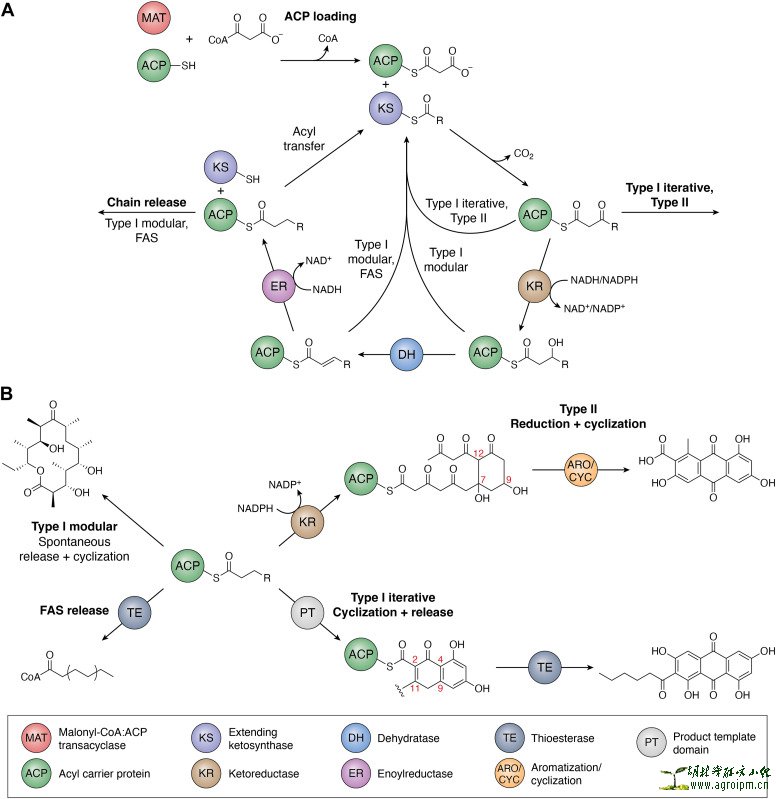
A generalized biosynthetic scheme for type I and II PKSs.
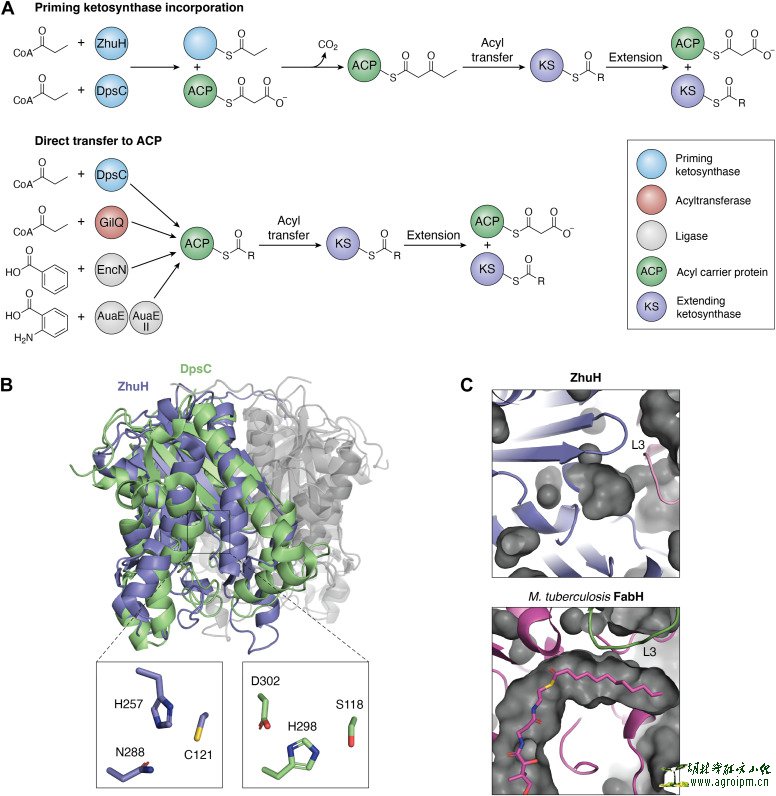
The molecular logic of priming enzymes in type II PKS.
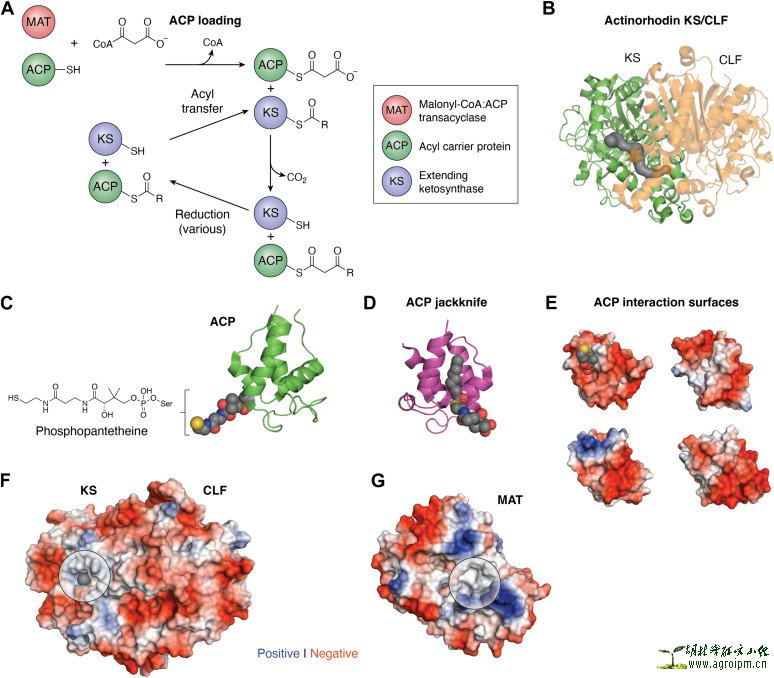
The molecular logic of elongating enzymes in type II PKS
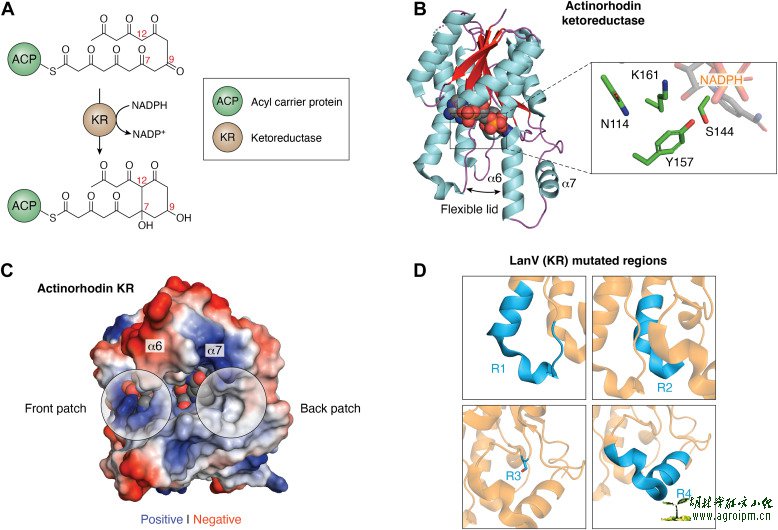
The molecular logic of ketoreductase (KR) in type II PKS
