Abstract
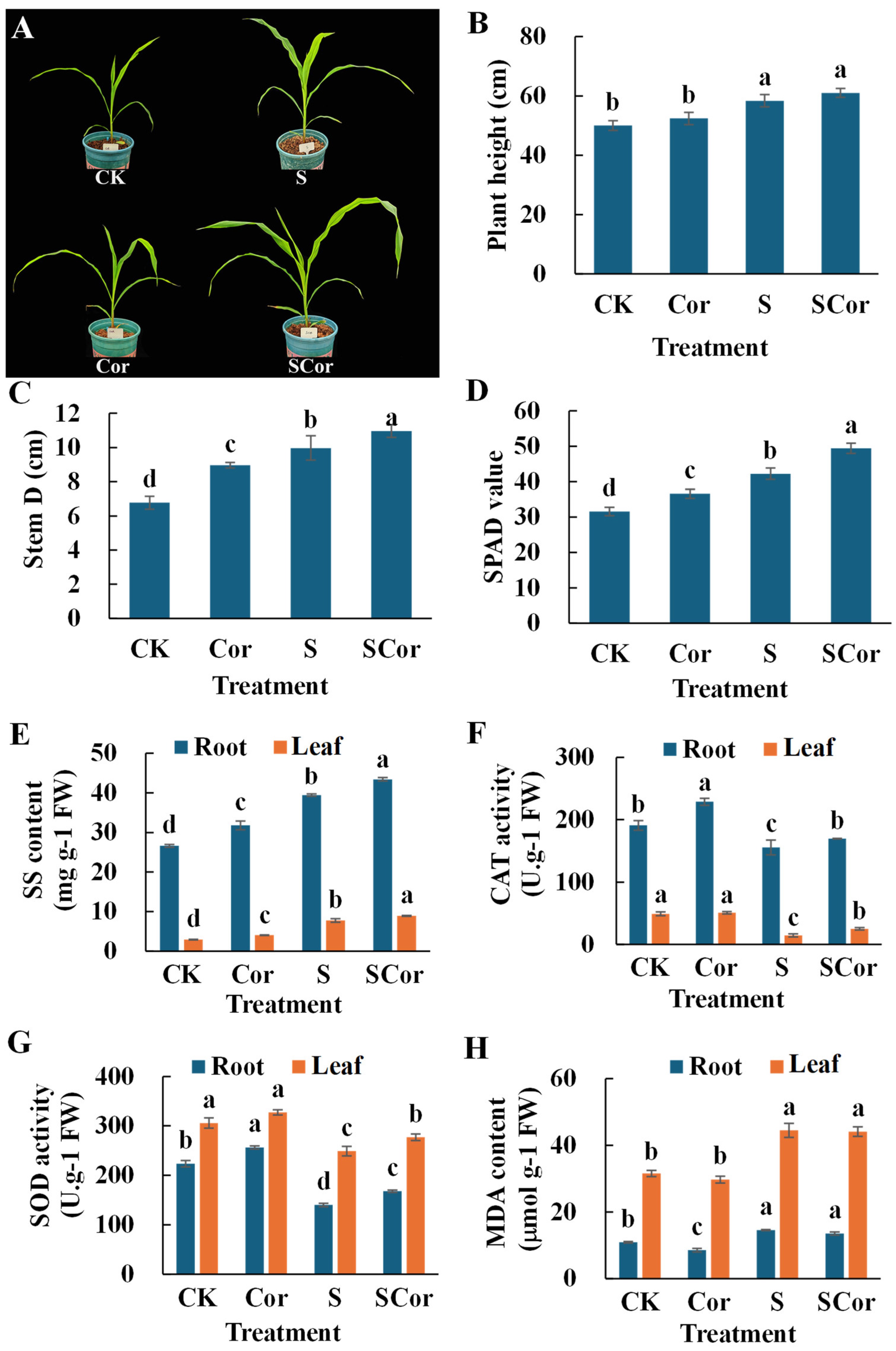
The rhizosphere microbiome and phytohormone signaling are critical determinants of plant growth and stress resilience. This study evaluated the combined effects of Streptomyces sp. HU2014 and coronatine (COR) on maize (Zea mays L.) seedlings. Four treatments were established: control (CK), COR seed soaking (Cor), HU2014 soil inoculation (S), and combined S + Cor (SCor). Growth parameters, chlorophyll content, and antioxidant/oxidative stress markers were measured, and root and leaf transcriptomes, together with root metabolomes, were compared between SCor and CK, followed by qRT-PCR validation. Compared with CK, SCor treatment significantly increased stem diameter (~60%), plant height (~20%), and relative chlorophyll content (SPAD, ~50%). Soluble sugar levels were elevated by over 40% in both leaves and roots, accompanied by tissue-specific modulation of antioxidant enzymes. Transcriptomic analysis of SCor vs. CK revealed 2459 differentially expressed genes (DEGs) in leaves and 3444 DEGs in roots; leaves exhibited upregulation of photosynthetic pigment metabolism (porphyrin and carotenoid pathways) and volatile defense compounds (alkaloids and monoterpenoids), whereas roots showed enrichment in phenylpropanoid/flavonoid biosynthesis, benzoxazinoid synthesis, and starch/sucrose metabolism. Metabolomics of SCor vs. CK identified 526 differentially accumulated metabolites (DAMs) in roots, with significant enrichment in aminoacyl-tRNA biosynthesis, phenylalanine metabolism, and linoleic acid metabolism. Integrative multi-omics analysis further revealed that the JA precursor 13-epi-12-oxo-phytodienoic acid co-clustered with stress-responsive transcription factors (e.g., DREB1C), while tricarboxylic acid (TCA) intermediates and phenylpropanoid metabolites were linked to energy and lignin biosynthesis genes. qRT-PCR confirmed the expression trends of 14 out of 15 tested genes. Collectively, combined HU2014 and COR application triggers tissue-specific transcriptional and metabolic reprogramming in maize, coupling JA-mediated stress signaling with enhanced carbon metabolism and secondary defense compound synthesis to promote rhizosphere adaptation and seedling vigor.